Fire Damage Restoration
Smoke, soot, and firefighting-water cleanup after a house fire — routed to independent local restoration crews who also document the loss for your insurer.
- 24/7 routing — active-water emergencies get priority
- Independent local crews with extraction and drying equipment
- Insurance-ready documentation from the first visit
- Free to use — no obligation, no markup
Fast response from independent local providers. No obligation.
Typical national cost$3,083 – $52,031Cost guide →About Fire Damage Restoration
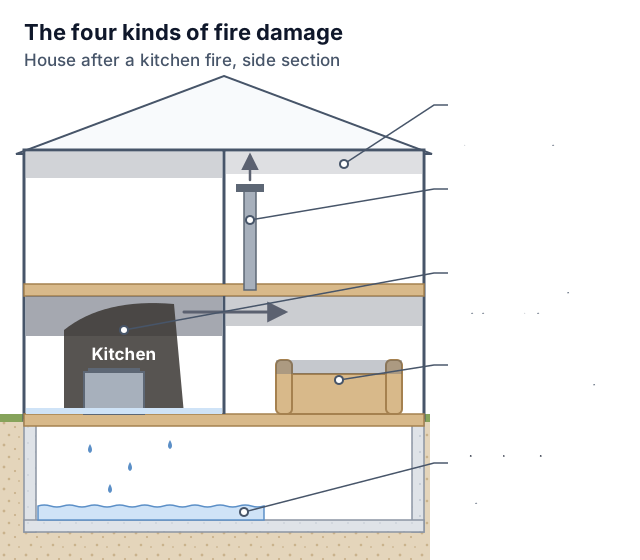
A house fire leaves more behind than burned material. Smoke and soot coat rooms the flames never reached, the water used to put the fire out soaks floors and walls, and the odor settles into fabric, drywall, and ductwork. Fire damage restoration deals with all of it: securing the house, drying out the firefighting water, cleaning smoke and soot from surfaces and belongings, removing odor, and documenting the loss for the insurance claim.
Most fire restoration is cleanup, not rebuild. Angi reports that about a third of restoration projects involve smoke damage with little or no fire damage, and only about 10% are homes that burned down completely. We route fire and smoke requests to independent local restoration crews, the same kind of companies that handle water damage, because drying out firefighting water is usually the first job on site. Wait for the fire department to clear the house before going back in.
Common Jobs We Route
- Smoke and soot cleaning on walls, ceilings, cabinets, and contents after kitchen, electrical, and other house fires
- Extraction and structured drying of water from fire hoses and sprinklers
- Odor removal, including ozone treatment, thermal fogging, and HVAC duct cleaning
- Board-up and tarping to secure doors, windows, and roof openings after a fire
- Contents cleaning, deodorizing, and removal of items that can't be saved
- Insurance documentation: photos, inventories, and a line-item scope for the adjuster
What Affects the Price
Providers quote their own work — these are the factors that consistently move the number.
- How much of the home is affected — Angi puts whole-home fire and smoke restoration at about $4–$7 per square foot
- Smoke-only versus structural damage — smoke cleanup runs $200–$1,200 per room (Angi), while burned framing, roofing, or wiring adds rebuild scope
- What burned — grease, oil, and plastic fires leave oily soot that takes more labor than dry soot from wood and paper
- Firefighting water — extraction and drying add $1,000–$6,000 (Angi), more when it sat before drying started
- Contents — deodorizing furniture and textiles ($200–$1,000, Angi) versus hauling out items that can't be saved
How It Works
- Step 1
Tell us what happened
Describe the fire, which rooms have smoke or water damage, and whether the fire department has cleared the house. Requests route to restoration crews covering your area.
- Step 2
Secure and assess
The crew boards up openings if needed, checks what's safe, and scopes smoke, soot, water, and contents damage in writing.
- Step 3
Dry, clean, deodorize
Firefighting water is extracted and dried first, then surfaces and salvageable contents are cleaned and the odor treated.
- Step 4
Document and rebuild
Photos, inventories, and a line-item estimate support your claim. Rebuild is done by the same crew or a contractor you choose.
Cost Guides
Fire Damage Restoration FAQs
How much does fire damage restoration cost?
Angi's national average is $27,477, with most jobs between $3,083 and $52,031 (updated September 2026). Smoke-only jobs sit near the low end, and structural rebuilds push past the top. Our fire damage restoration cost guide breaks out smoke, soot, water, contents, and rebuild costs with sources.
Why is there so much water damage after a fire?
Fire hoses and sprinklers put a lot of water into a house in a short time, and it soaks into drywall, insulation, and subfloors. That water needs the same fast extraction and drying as any other water loss, which is why restoration crews usually start with drying before smoke cleanup.
Will homeowners insurance pay for fire restoration?
Usually, when the fire was accidental — Angi says homeowners insurance normally covers fire damage restoration in that case, subject to your policy and deductible. Call your insurer early, keep receipts for emergency expenses, and let the crew photograph and inventory damage before anything is thrown away.
Fire Damage Restoration by Area
Need fire damage restoration?
Send the short form — no obligation.